News
Luxembourg signs the Code of Professional Qualifications for Property Surveyors
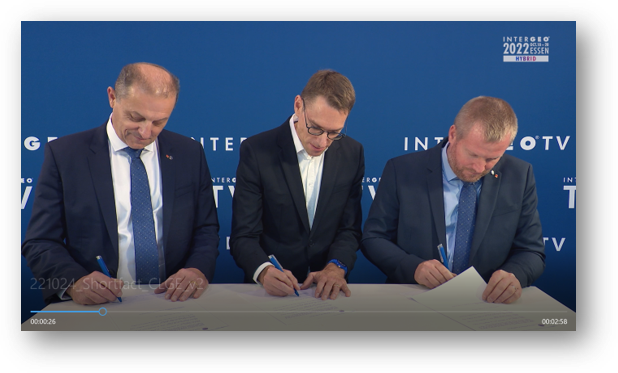
During INTERGEO 2022 in Essen (DE), the Code of Professional Qualifications for Property Surveyors (CPQS) was signed by Marc Didier, the President of Luxembourg Association for Geodesy and Geoinformation. Herewith, the Grand Duchy becomes the 19th signatory, at exactly 50% of the 38 principal members of CLGE.
This initiative started in 2016, indeed gathers more and more CLGE member states and becomes a real success.
It was also presented at the FIG Congress 2022 in Warsaw (PL), where our Polish members also signed the CPQPS. Our American colleagues from the National Society of Professional Surveyors (NSPS) witnessed the ceremony and were impressed. They envisage following our example. Within the Forum of Regional Bodies (FoRB), this is a totally normal situation. One of FoRB’s goals is indeed to exchange best practice and the CPQPS undoubtedly an example.
Other CLGE member countries are considering the signature. We will keep you informed.
Back
Premium CLGE Sponsors