News
Poland signs the Code of Professional Qualifications for Property Surveyors
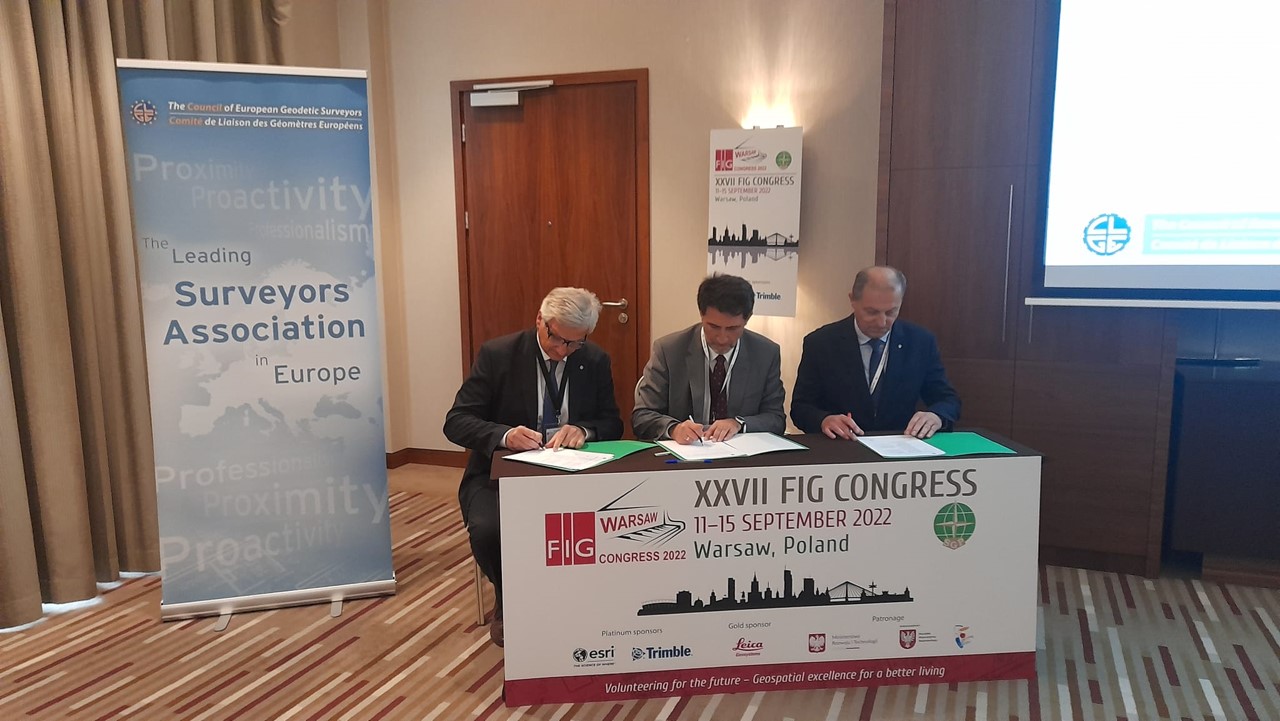
Vladimir Krupa, Robert Rachwał and Matjaž Grilc sign the Code of Professional Qualifications for Property Surveyors
On 12th September 2022 Robert Rachwał, President of the ‘Polish Commercial Geodesy’ association signed the Code of Professional Qualifications for Property Surveyors.
This is a nice step forward for the coalition of countries following this code and for the CLGE member from Poland.
The code requires the following education of Property Surveyors: Master’s Degree + 2 Years of Traineeship + A State Examination. Moreover, Property Surveyors should be sworn in, with a specific oath. They should follow a code of conduct, have a liability insurance, and undergo scrutiny about their ethical behaviour and the quality of their work.
The code was presented by Matjaž Grilc, Chair of CLGE’s interest group in charge. Many FIG Commission 2 members, especially the United States, were very interested by the topic and intend to implement a similar system in their country. CLGE suggests that the matter would be analysed in more detail within the Forum of Regional Bodies and FIG Commission 2.
Back
Premium CLGE Sponsors